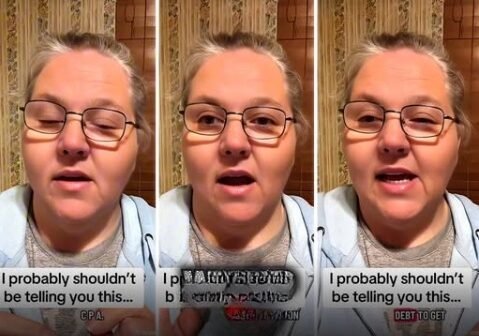
DEBT COLLECTOR EXPOSED Former Debt Collector Spills The Beans On The One Question That Stops Calls Cold
A woman who says she spent 15 years working as a debt collector is going viral online after revealing what she calls a simple “cheat code” that consumers can use when they’re contacted about a debt.
According to her, one of the most powerful questions you can ask a debt collector is surprisingly straightforward: “Can you provide written proof that you have the legal right to collect this debt?” She explains that this question alone can sometimes stop collectors in their tracks, especially in cases where debts have been bought and sold multiple times between different collection agencies.
The reason, she says, has to do with how the debt collection industry often operates. Many debts—such as unpaid credit cards, medical bills, or old loans—are frequently sold by the original lender to third-party companies for a fraction of the original amount owed. These companies then attempt to collect the full balance from the consumer, hoping to make a profit.
However, when debts are sold and resold over time, the paperwork that proves ownership of that debt can sometimes become incomplete or difficult to track. Without proper documentation, a collection agency may struggle to prove that it actually has the legal authority to collect the money.
That’s where consumer protections come into play.
Under the Fair Debt Collection Practices Act—often referred to as the FDCPA—consumers have specific rights when dealing with debt collectors. One key provision, found in 15 USC 1692g, allows individuals to dispute a debt within 30 days after being contacted by a collection agency.
If a consumer sends a written dispute during that time, the law requires the collector to pause all collection activity until they provide verification of the debt. That verification typically includes information such as the name of the original creditor, the amount owed, and documentation showing that the collection agency legally obtained the debt and has the right to pursue payment.
The former collector explains that while simply asking for proof verbally may sometimes cause collectors to back off temporarily—especially if they don’t have the documents immediately available—the strongest protection comes from sending a written dispute letter, ideally through certified mail so there’s proof it was received.
Once that written dispute is submitted, the collection agency must stop contacting the consumer about payment until they provide the required documentation.
Since sharing this information, the woman’s explanation has spread widely across social media platforms like TikTok and Instagram, where thousands of viewers are discussing consumer rights and sharing their own experiences with debt collectors.
Still, financial experts often remind people that while these legal protections exist, disputing a debt doesn’t automatically erase it. If the collector does have the proper documentation, they may resume collection efforts once verification is provided.
Even so, the viral tip has sparked a larger conversation about consumer awareness and financial rights, with many people realizing for the first time that they have legal tools available when dealing with debt collection agencies.