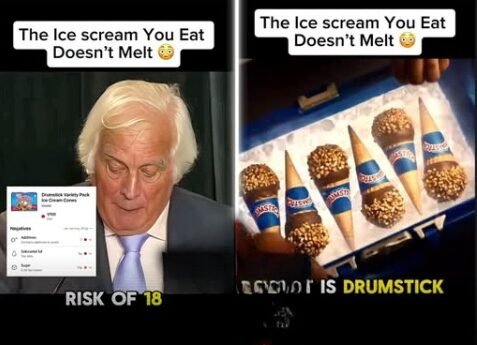
18 CONTAMINANTS RISK They’re Selling You “Ice Cream” That Doesn’t Melt… And They Just Exposed The Wild Ingredients
A viral video on TikTok is getting a lot of attention after raising questions about what some popular “ice cream” products really are—and what’s actually in them.
In the clip, the creator points out that certain brands labeled as “frozen dairy desserts” aren’t legally considered real ice cream. That distinction comes down to ingredients and composition—traditional ice cream must meet specific standards for milk fat content, while these alternatives often use cheaper fillers, stabilizers, and gums to mimic the texture.
To demonstrate the difference, the video shows a simple heat test, where scoops of the product are left out at room temperature. Instead of melting into a creamy liquid like typical ice cream, some of them reportedly hold their shape much longer or melt unevenly. The creator claims this is due to gum-thickened formulas and stabilizers that are designed to extend shelf life and maintain structure.
Things escalated further when the product was scanned using the Safe Choice app, which flagged it with a high “PFA risk” score, allegedly pointing to multiple potential contaminants and noting a lower presence of real dairy ingredients. That part of the video really got people talking, with viewers expressing concern about what they might actually be consuming.
However, some experts and commenters are pushing back, saying the melting test can be misleading. Stabilizers and emulsifiers are commonly used in many frozen products—including some traditional ice creams—to improve texture and prevent ice crystals. They argue that slower melting doesn’t automatically mean something is unsafe, just formulated differently.
Still, the video has sparked a wider conversation about food labeling, ingredient transparency, and how much consumers really understand about what they’re buying. Many people admitted they had never even noticed the term “frozen dairy dessert” before, while others are now saying they’ll be checking labels more closely.
At the center of it all is a growing curiosity—and a bit of skepticism—about processed foods and how they’re made.
Now the debate online is simple but divided:
Is this just food science doing its job… or are people being misled about what they’re eating? 👀🍦